From Baghdad to Kolkata:
Metalwork & Ceramics
Ritual Objects, Vessels of Memory
All Baghdadi-Indian event photos courtesy of Maegan Gindi
Sefer Torah
Silver-covered wooden case (tik) and handwritten parchment scroll (klaf) on deerskin
Baghdad and Kolkata (Calcutta), dedicated 1898
This Torah scroll was dedicated to the Maghen David Synagogue in Calcutta in 1898 by Signora Salḥah in memory of her sister Farḥah daughter of Ḥababah,
as recorded in the inscription on the case’s exterior.
In the Sephardic tradition, the Torah scroll is housed in an upright wooden case known as a tik rather than wrapped in a cloth mantle. The tik and parchment scroll were likely purchased in Baghdad before being brought to India.
The inscriptions covering the silver panels combine biblical verses, memorial dedications, legal formulas, genealogy, and mystical language. Their dense use of acronyms and abbreviations reflects Sephardic and Mizrahi epigraphic traditions, in which scribes condensed blessings and honorifics to conserve space on costly silver, velvet, and parchment.
The right panel is composed of two biblical verses with a concluding legal addendum preserving family authority over the scroll:
:וְזֹאת הַתּוֹרָה אֲשֶׁר־שָׂם מֹשֶׁה לִפְנֵי בְּנֵי יִשְׂרָאֵל
And this is the Torah that Moses set before the Children of Israel (Deuteronomy 4:44).
אֵלֶּה הַחֻקִּים וְהַמִּשְׁפָּטִים אֲשֶׁר נָתַן ה׳ בֵּינוֹ וּבֵין
:בְּנֵי יִשְׂרָאֵל בְּהַר סִינַי בְּיַד־מֹשֶׁה
These are the statutes and ordinances that God established between the Divine and the Children of Israel at Mount Sinai, through Moses (Leviticus 26:46).
The inscription omits the phrase וְהַתּוֹרֹת (“and the teachings”) from the original Leviticus verse.
עַל מְנָת שֶׁהַכֹּל בְּיַד בַּעֲלֵי הַסֵּפֶר תּוֹרָה וּבְיַד בַּעֲלֵי כֹּחָם
On the condition that everything remains under the authority of the owners of the Torah scroll and their authorized representatives.
The left panel contains a memorial inscription:
תִּיק זֶה וְסֵפֶר תּוֹרָה שֶׁבּוֹ הִקְדִּישָׁה סִ (סִינְיוֹרָה) סַלְחָה מב"ת (מִנָּשִׁים בָּאֹהֶל תְּבֹרַךְ) אֵשֶׁת הַמְּרֻחָם מָרְדְּכַי אַבְרָהָם הַכֹּהֵן עַל נר"ן (נֶפֶשׁ, רוּחַ, נְשָׁמָה) אֲחוֹתָהּ פַרְחָה אֵשֶׁת דָּוִד ח' [חַי] יוֹסֵף זְכַרְיָה נ"ע (נוּחוֹ עֵדֶן) נלב"ע (נִפְטְרָה לְבֵית עוֹלָמָהּ) ג' אֲדָר תרנ"ח
.תנצב"ה (תְּהֵא נִשְׁמָתָהּ צְרוּרָה בִּצְרוֹר הַחַיִּים). מָקוֹם שֶׁיִּרְצוּ יוֹבִילוּהוּ וְהָרְשׁוּת
This tik (case) and the Torah scroll within it were dedicated by Signora Salḥah, blessed among women in the tent, wife of the late Mordekhai Avraham Ha-Kohen, for the nefesh, ruaḥ, and neshamah of her sister Farḥah, wife of David Ḥai Yosef Zekharyah, may he rest in Eden, who departed for her eternal home on the third of Adar, 5658 (1898).
May her soul be bound in the bond of life.
To whatever place they desire they may take it,
and the authority remains theirs.
The inscription preserves numerous Sephardic honorific abbreviations. Among them are:
מב״ת — מִנָּשִׁים בָּאֹהֶל תְּבֹרַךְ
“Blessed above women in the tent,” adapted from the Song of Deborah, originally referring to Yael and used to honor a woman’s modesty and devotion.
נר״ן — נֶפֶשׁ, רוּחַ, נְשָׁמָה
“Life-force, spirit, [and] transcendent soul,” invoking the three dimensions of the soul in Jewish mystical thought. In dedicating the Torah scroll, the family prayed for the spiritual elevation of the deceased across all three of those levels.
The title “Signora,” appearing in abbreviated form before Salḥah’s name, derives from the Spanish and Italian honorific adopted throughout the post-Expulsion Sephardic diaspora. Its appearance on a Torah dedicated in Calcutta reflects the enduring cultural ties linking Baghdad, India, and the wider Sephardic world.
The inscription concludes with a legal safeguard, ensuring the heirloom would remain under family stewardship for generations.
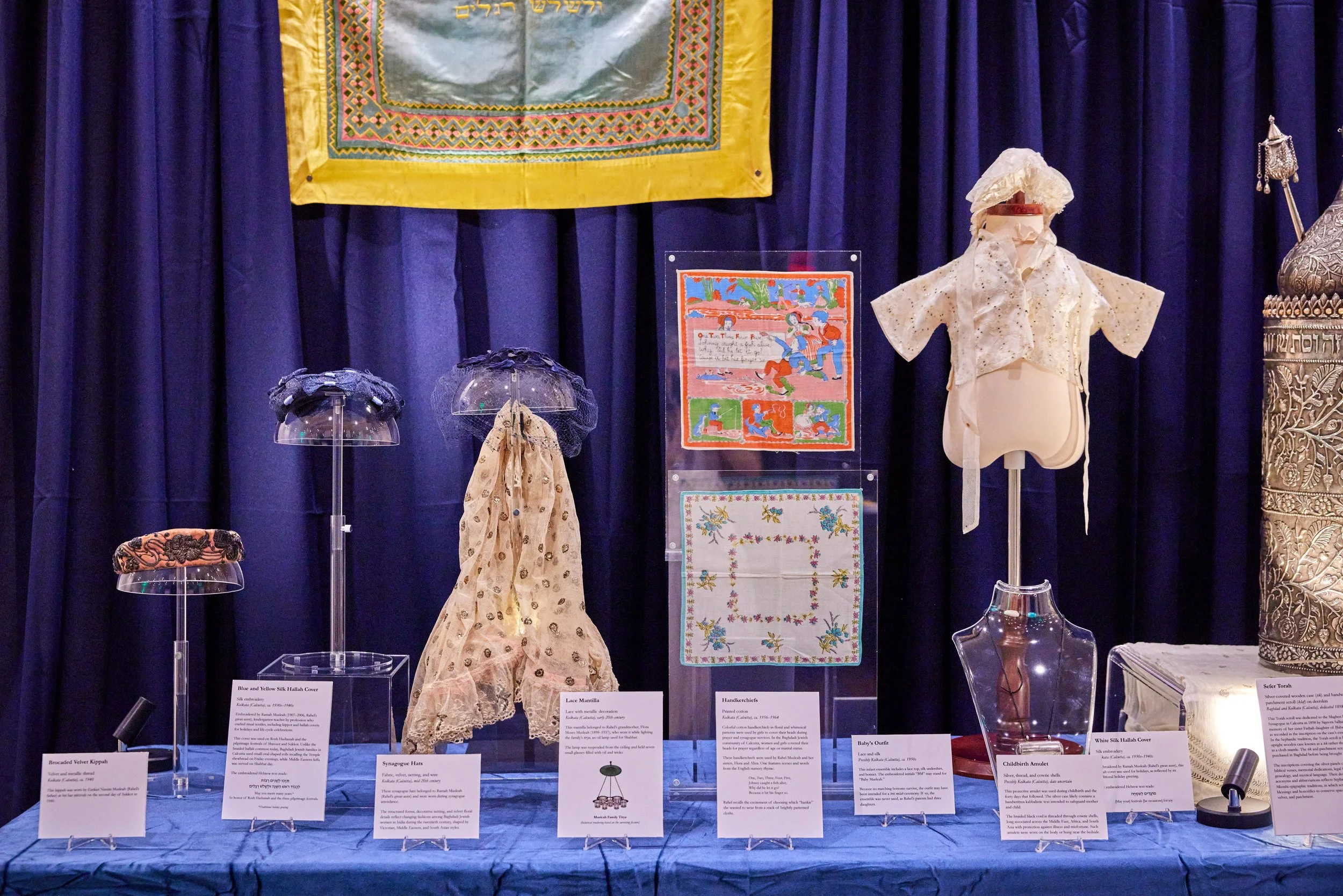
Childbirth Amulet
Silver, thread, and cowrie shells
Possibly Kolkata (Calcutta), date uncertain
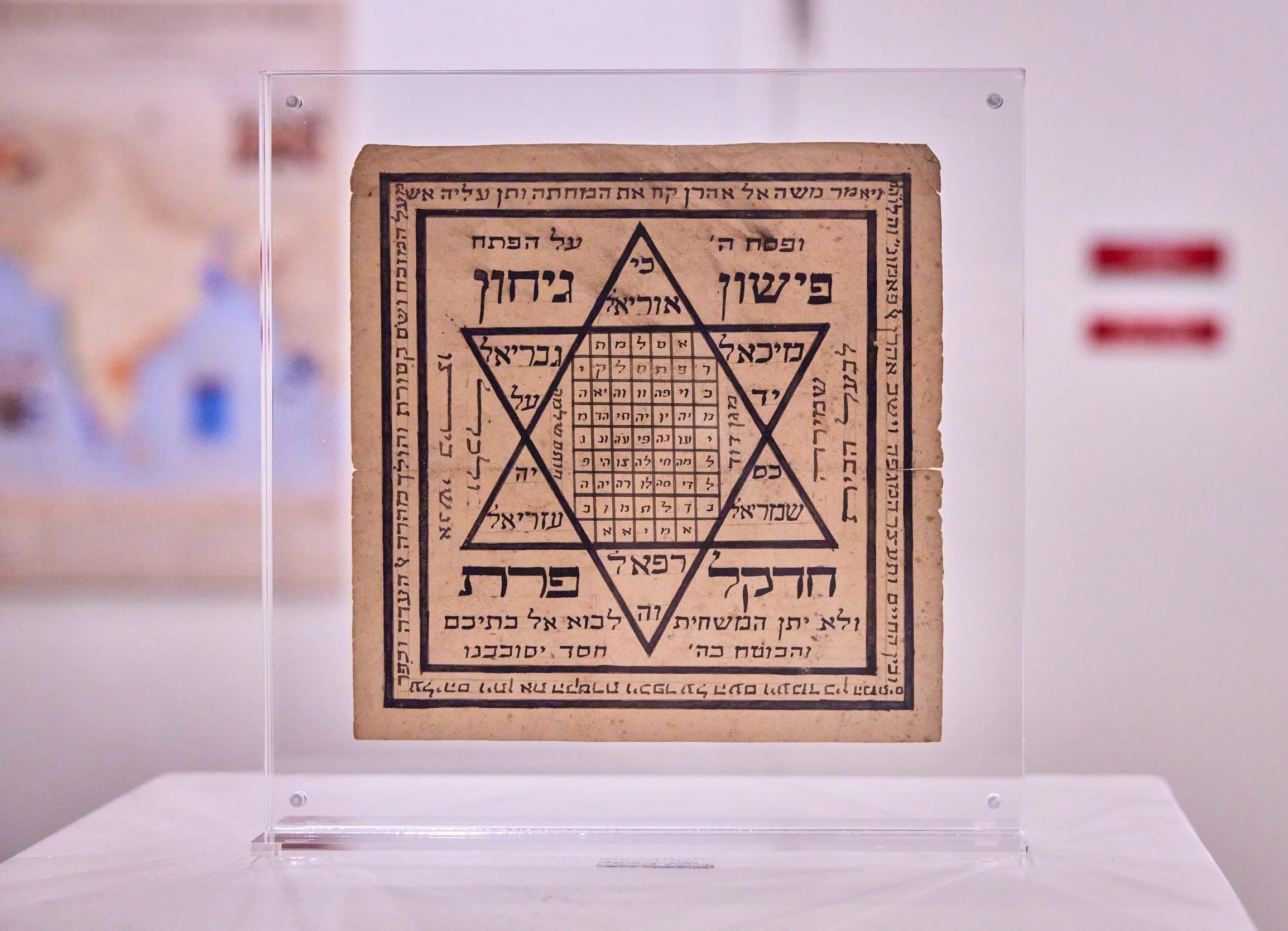
This protective amulet was used during childbirth and the forty days that followed. The silver case likely contains a handwritten kabbalistic text intended to safeguard mother and child.
The braided black cord is threaded through cowrie shells, long associated across the Middle East, Africa, and South Asia with protection against illness and misfortune. Such amulets were worn on the body or hung near the bedside.
Kiddush Cup for Shabbat and Festivals
Silver
Kolkata (Calcutta), mid-20th century
This Kiddush cup reflects the distinctive ritual culture of Baghdadi Jews in India. The goblet includes a matching saucer and fitted lid, a form shaped by both Jewish law and the climate of Iraq and India.
According to halakhah (Jewish law), wine used for Kiddush should remain covered until the moment of the blessing, preserving its dignity and ritual propriety. On Friday nights when there is often a gap between the time the wine is poured and the blessing is recited, keeping the cup covered until the exact moment of the blessing ensures that the wine remains protected and pure. The lid also shielded sweet wine from dust and insects in the warm climate of Calcutta.
The overflowing cup symbolizes abundance and divine blessing; the saucer catches any excess wine that might spill over the rim.
Pesaḥ Wine Pitcher
Ceramic
Probably Europe, early 20th century
Before commercially produced kosher wine became readily available in Calcutta, Baghdadi Jewish families often prepared wine from blackcurrants.
The pitcher was likely imported from Europe by Eliahu Yosef Musleah (ca. 1823–1895), Rahel’s great-great-grandfather, a Baghdadi merchant who settled in Calcutta during the nineteenth century. It was later used during Passover celebrations in Calcutta.
Pesaḥ Kiddush Cups
Silver
Kolkata (Calcutta), ca. 1960
These Passover cups were designed by Rabbi Ezekiel Nissim Musleah (Rahel’s father), who sketched the Hebrew inscriptions and commissioned a local Indian silversmith to produce them. He might have also given the artisan an illustration from a Haggadah printed in Livorno, Italy, a center of Sephardic printing. The rabbi’s cup depicts the seder table with European-looking men wearing pointed hats, a fashion not common to Baghdadi or Indian culture.
One cup bears the initial “M” for Margaret Musleah (Rahel’s mother), while smaller cups made for the couple’s daughters feature their names in flowing calligraphy alongside Indian motifs including elephants, parasols, and village scenes.
Mezuzah
Metal case and parchment scroll
Possibly Kolkata (Calcutta), Early 20th century
This mezuzah contains the handwritten biblical passages traditionally affixed to the doorposts of Jewish homes.
The text includes the Shema prayer, affirming the unity of God and the commandment to inscribe these words “upon the doorposts of your house and upon your gates.”